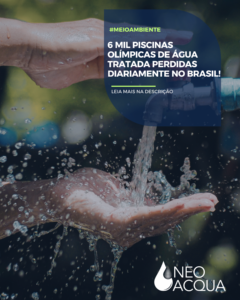
Todos os dias, o Brasil perde um volume de água tratada equivalente a mais de 6 mil piscinas olímpicas. Um número que impressiona — e que revela um dos maiores desafios da infraestrutura hídrica no país: as perdas no sistema de abastecimento.
Essas perdas acontecem antes mesmo da água chegar ao consumidor. Vazamentos nas redes, falhas de medição e consumos não autorizados fazem com que bilhões de metros cúbicos de água tratada sejam desperdiçados anualmente. Além do impacto ambiental, esse cenário pressiona os custos operacionais e compromete a eficiência de todo o sistema.
Mais do que um problema técnico, trata-se de uma questão estratégica. Reduzir perdas significa ampliar a oferta de água sem a necessidade de novas captações ou exploração de mananciais — um caminho mais sustentável, econômico e inteligente para o setor.
Hoje, o índice de perdas no Brasil ainda está acima do ideal. Mas existe um potencial concreto de mudança: ao aproximar os níveis atuais das metas estabelecidas para os próximos anos, seria possível economizar um volume de água suficiente para abastecer milhões de pessoas.
Em um contexto de mudanças climáticas e crescente demanda por recursos hídricos, eficiência deixa de ser diferencial e passa a ser necessidade.
Na NeoAcqua, acreditamos que engenharia bem aplicada transforma desafios em soluções. Trabalhar pela redução de perdas é, também, trabalhar por um futuro mais sustentável, acessível e equilibrado para todos.
NeoAcqua. Transformando engenharia em qualidade de vida.